

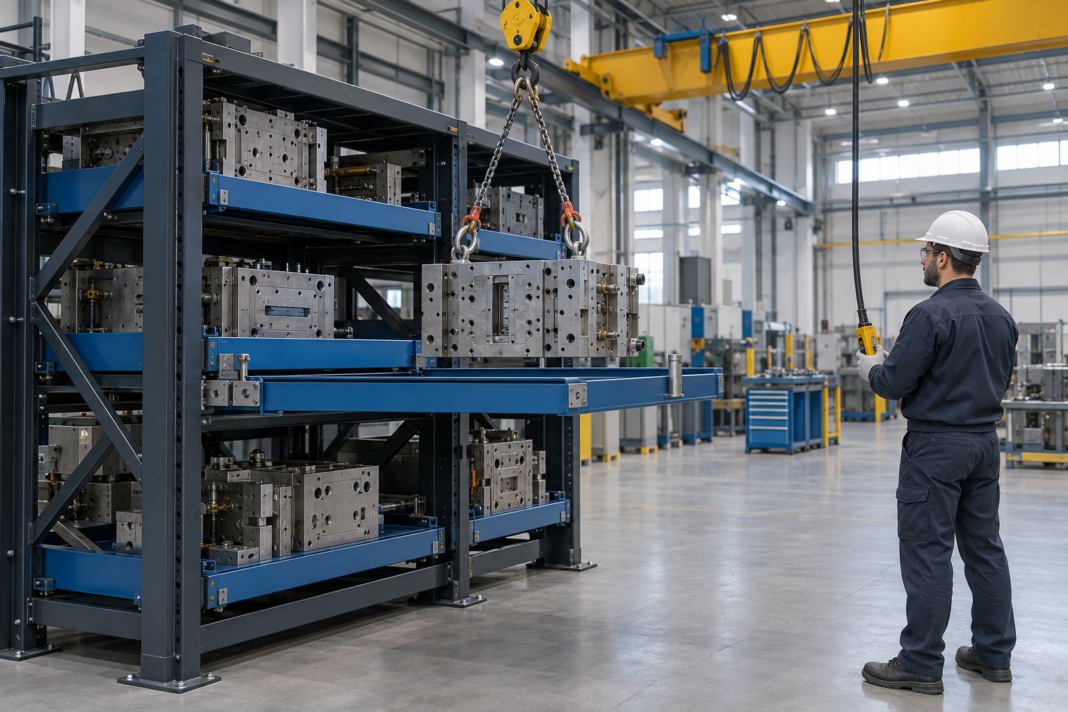
Selecting a drawer style rack for a mold storage area is not simply a matter of finding a strong steel structure with enough empty compartments, because the rack must work together with the overhead crane, hoist, lifting accessories, mold geometry, available aisle, floor condition, operator position, and production changeover process. 🏭🏗️ When I enter a well planned mold storage area, I can usually see a clear path from the closed drawer to the injection molding machine: the correct drawer opens without obstruction, the crane hook approaches vertically, the slings reach approved lifting points, employees remain outside the suspended load path, and the mold leaves its storage position without rubbing against the frame or requiring an unsafe sideways pull. A properly engineered solution from Detay Industry should create this complete handling sequence rather than treating crane access as an accessory that can be considered after the rack has already been installed.
Begin with the Crane and Mold Handling Process
I always recommend starting the selection process by documenting how molds currently move from storage to production, because the same rack can perform very differently depending on whether the plant uses an overhead bridge crane, a jib crane, a gantry crane, an electric chain hoist, a forklift attachment, or a dedicated transfer cart. The Health and Safety Executive guidance on lifting operations explains that lifting work should be properly planned, appropriately supervised, and carried out safely, while the suitability of the equipment, load attachment, visibility, positioning, and access should be considered before the lift begins. In a mold storage application, this means the planner should check the hook approach, crane travel direction, available lifting height, sling angles, nearby columns, machine locations, lighting, and the position of workers during every stage of the operation.
A drawer that opens toward the wrong side of the crane runway may force the operator to pull the load diagonally, while a drawer positioned beneath an unsuitable ceiling structure may leave too little vertical clearance for the mold, lifting beam, slings, and crane hook. The crane should normally raise the mold vertically from its approved lifting points before horizontal travel begins, because uncontrolled side pulling can introduce forces that the crane, rack, or lifting accessories were not intended to withstand. I like to think of the rack and crane as two dancers sharing the same stage: even if both are individually capable, their movements must be coordinated or they will constantly block one another. 💡
Create a Complete Mold Inventory Before Requesting a Rack
The rack manufacturer needs accurate mold information before selecting drawer widths, depths, capacities, opening ratios, and level spacing. I recommend creating an inventory that records every mold’s verified weight, base dimensions, total height, center of gravity, lifting points, attached accessories, expected storage orientation, compatible injection molding machine, production frequency, and maintenance condition. Workers should never estimate a mold’s weight only by looking at it, because two tools with similar external dimensions may have very different internal construction and mass. The selected mold rack should accommodate the heaviest planned mold within the declared capacity of its individual drawer, not merely within the total capacity of the complete structure.
This information also helps the engineering team determine whether the mold will sit centrally on the drawer or create an uneven concentrated load. A mold with an offset center of gravity may behave differently during drawer movement and crane pickup, especially if the lifting points are not symmetrical. The storage plan should therefore show where each mold will sit and how the crane will connect to it. The official drawer mold rack selection guidance emphasizes real mold weights, dimensions, drawer extension, floor capacity, and operational flow, which reflects the practical reality that a catalogue load figure alone cannot define the correct installation.
Choose the Drawer Opening Ratio According to Crane Reach
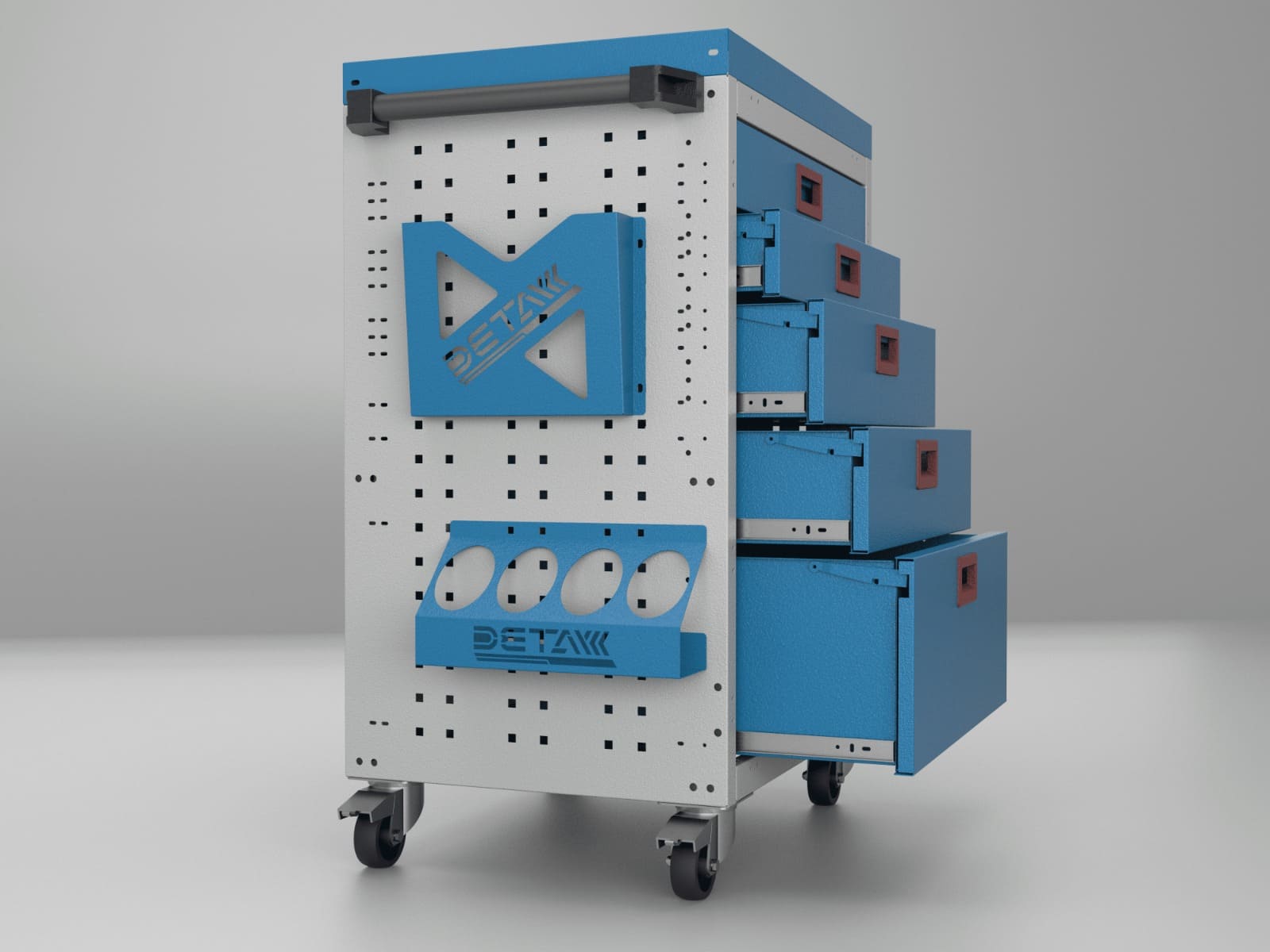
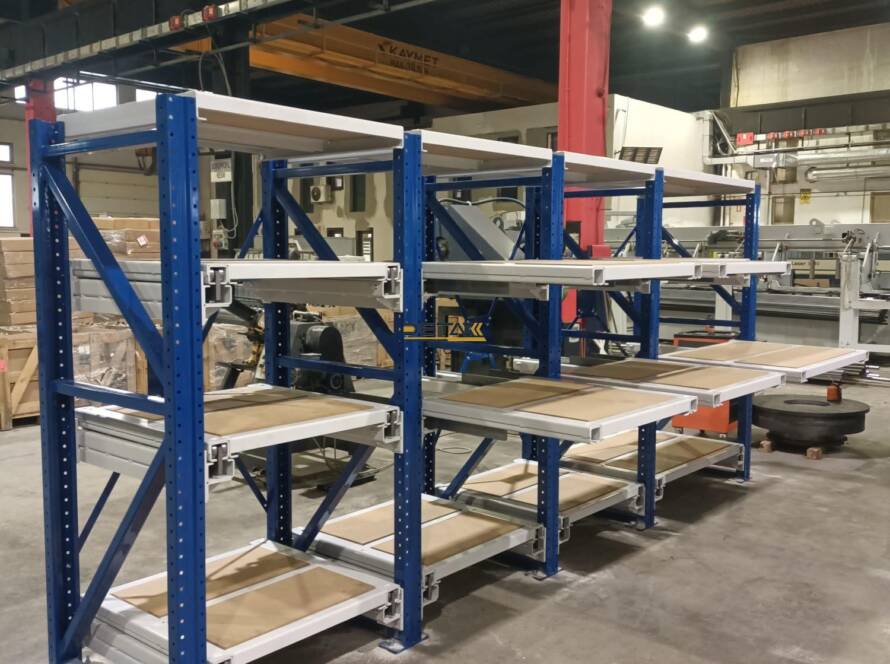
Drawer extension directly affects crane accessibility, aisle occupation, and rack stability. A partial extension design may keep more of the loaded drawer within the main frame, which can help reduce the forward movement of the center of gravity and preserve space in a narrow aisle, while a full extension design can expose the entire mold platform and provide clearer access to lifting points. Neither option is automatically better for every facility, so the decision should follow the mold dimensions and the crane approach.
For example, a 65% opening drawer may be sufficient when the lifting eyes remain fully reachable and the crane hook can align vertically without contacting the rack, while a 100% opening drawer may be more appropriate when the mold is wide, the rear lifting points would otherwise remain inside the bay, or the maintenance team needs complete visual access before lifting. A suitable drawer rack system should be tested with a representative mold and the actual lifting arrangement before the design is finalized. I prefer a simple full scale simulation whenever possible, because a drawing may show enough clearance mathematically while a real sling, hook block, connector, or worker’s hand still conflicts with the frame.
| Selection Factor | Partial Extension Drawer | Full Extension Drawer | What the Planner Must Verify |
|---|---|---|---|
| Crane access | Suitable when lifting points remain fully reachable | Provides clearer access to the complete mold surface | Hook alignment, sling position, and vertical lifting path |
| Aisle requirement | Uses less forward working space | Requires a larger clear opening zone | Drawer travel, operator position, and exclusion area |
| Center of gravity | More of the drawer remains inside the frame | The load moves farther toward the aisle | Rack stability, anchoring, floor strength, and interlocks |
| Mold inspection | Provides access to the exposed section | Allows broader visual inspection and preparation | Whether planned tasks can be completed safely on the open drawer |
| Changeover frequency | May suit molds moved less frequently or compact facilities | Can support frequent crane pickup and direct handling | Real production schedule and mold change workflow |
Verify Crane Height, Hook Geometry, and Sling Clearance
Available lifting height is often overlooked because teams measure the rack and mold but forget the vertical space consumed by the hook block, lifting beam, shackles, chains, and sling angle. The planner should calculate the full lifting stack from the top of the mold to the highest point of the hook assembly, then confirm that the crane can raise the mold clear of the drawer and surrounding structure. A tall mold stored on an upper level may leave insufficient room for safe connection even when the crane has enough nominal capacity.
The OSHA guidance on sling use highlights the importance of selecting lifting equipment according to the load’s weight, shape, size, environment, and intended configuration. The mold must remain balanced in the selected sling arrangement, and workers should keep their bodies away from pinch zones between the sling, load, crane hook, and surrounding structure. A well planned injection rack should therefore provide enough space for the lifting accessories, not only for the steel mold itself.
Match Every Drawer to the Real Mold Load
The declared load capacity per drawer should remain clearly visible, and the storage plan should prevent employees from adding extra components that push the loaded drawer beyond its approved limit. Mold plates, spare inserts, clamps, cooling accessories, and lifting fixtures may remain beside a mold and quietly increase the real weight, so the inventory should include everything carried by the drawer. OSHA requires stored materials to be secured against sliding, falling, or collapse and advises facilities to maintain clear aisles and respect rack capacities, which provides a useful foundation for heavy industrial mold storage.
A heavy duty rack must also resist repeated drawer movement under load, because the rails, rollers, bearings, stops, handles, welds, frame, and anchors experience forces every time a mold moves toward the aisle. The selected system should state whether its capacity applies while the drawer is closed, partially open, or fully extended, and the operator should never assume that a static shelf rating automatically represents a safe moving load. This engineering discipline separates a professional heavy duty installation from an ordinary cabinet that simply looks strong.
Check Floor Capacity, Levelness, and Anchoring
A drawer mold rack transfers concentrated forces into the floor through its base plates and anchors, and these forces change when a loaded drawer extends outward. The facility should confirm that the concrete slab, foundation, floor thickness, reinforcement, surface condition, and anchor locations are suitable for the proposed installation. Cracked, uneven, weak, or contaminated concrete may require repair or a different anchoring strategy before the rack can be installed.
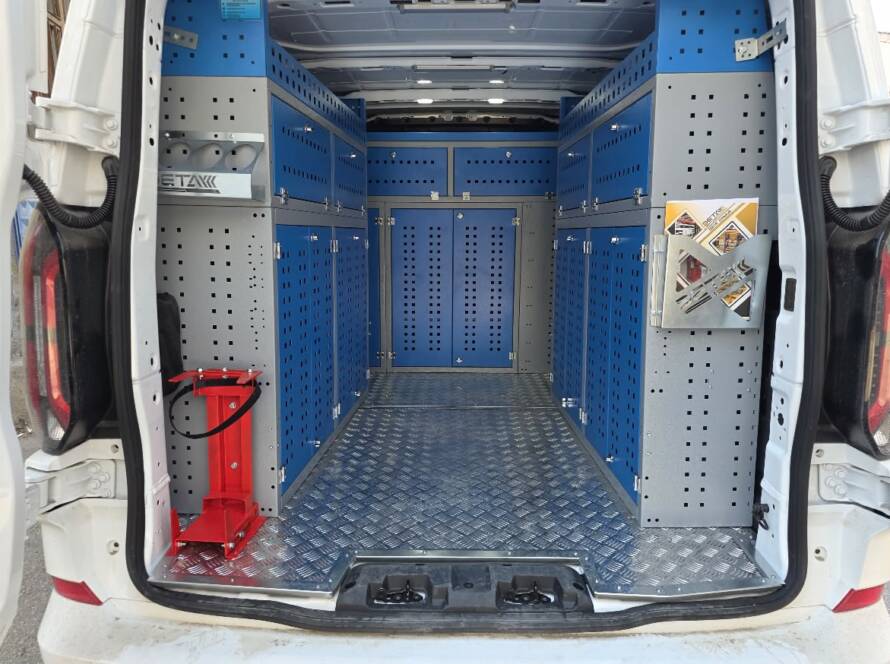
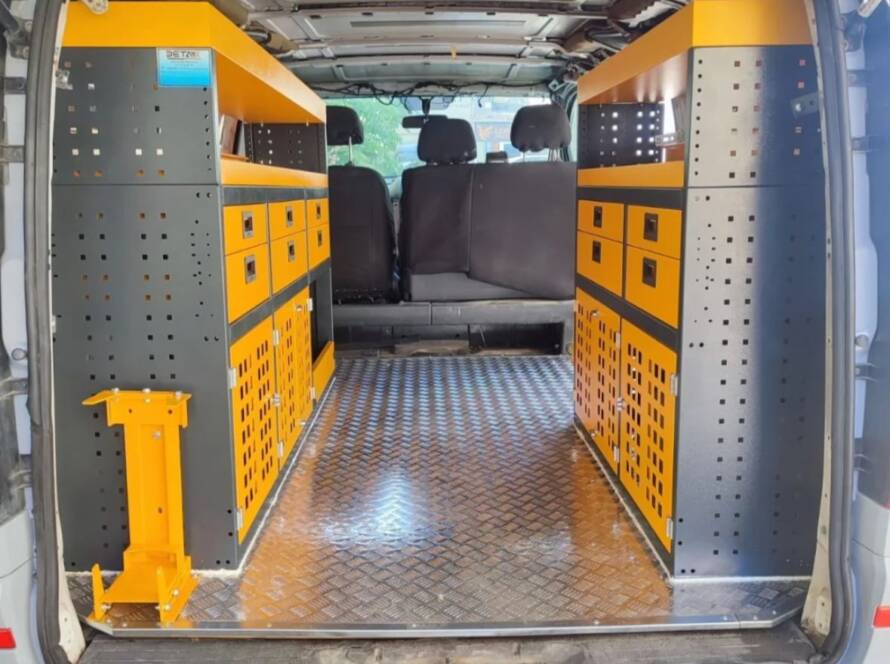
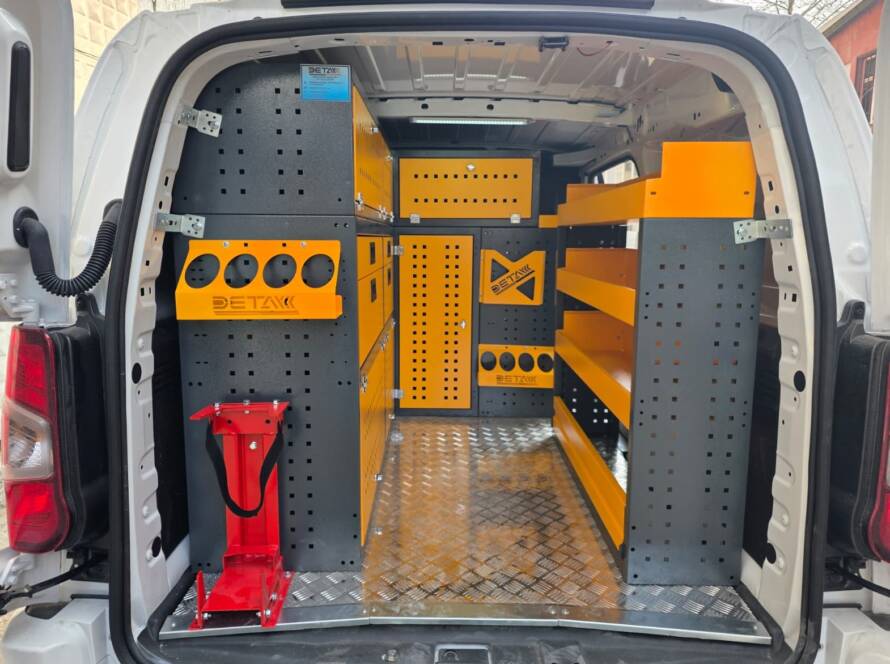
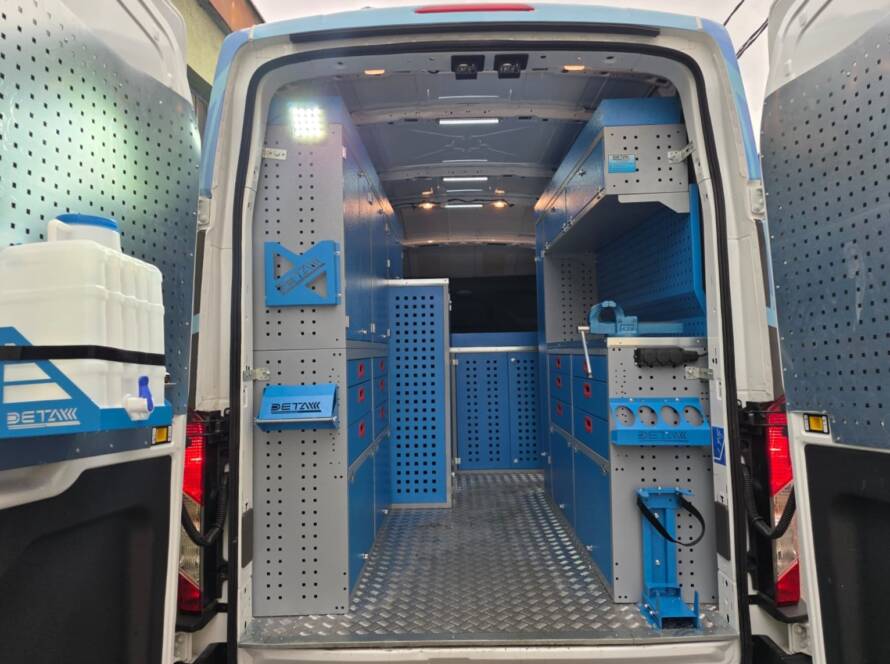
The rack should stand level so the drawers do not move unexpectedly, bind in their guides, or place uneven loads on the frame. Anchors should follow the manufacturer’s project design, and workers should never relocate the rack, change base plates, or drill additional holes without engineering approval. The same attention to secure mounting that applies to an in-vehicle rack system provides a useful comparison, although a stationary mold rack carries different loads and needs a facility specific structural evaluation. In both applications, the storage system can only control its contents when the system itself remains securely connected to its supporting structure.
Control the Number of Drawers That Can Open
Opening a loaded drawer moves its center of gravity toward the aisle, and opening several loaded drawers simultaneously can create a much greater stability demand. The selected rack should therefore include a suitable operating control, such as a mechanical interlock, a locking sequence, or another manufacturer approved method that prevents unsafe simultaneous opening where required. Employees should never bypass these controls for convenience, even when the molds appear lighter than the drawer capacity.
The design provided by Detay Industry should clearly state how many drawers may open at one time, where the mold should sit on each drawer, and which operating steps apply before crane connection. Labels should be durable and easy to read, while training should explain why the rule exists instead of presenting it as an arbitrary restriction. In my experience, people follow procedures more consistently when they understand that every open drawer behaves like a long lever carrying a heavy steel load.
Preserve a Clear Crane and Drawer Operating Zone
The area in front of the rack must accommodate the fully opened drawer, crane hook, lifting accessories, operator position, signal person where needed, and a suitable exclusion zone. Pallets, empty containers, oil drums, tool carts, scrap, and temporary production materials should never occupy this space, because they can force workers into the suspended load path or interfere with drawer movement. OSHA storage guidance requires aisles and passageways to remain clear for employees and material handling equipment, while HSE lifting guidance emphasizes planning access and controlling the lifting area.
I recommend marking the drawer travel and crane pickup zone on the floor, but visual lines should support rather than replace supervision and housekeeping. The surrounding mold shop layout should also separate pedestrian traffic from crane operations whenever reasonably possible. A person walking through the area may not realize that a mold will move overhead within seconds, so physical barriers, warning lights, procedures, and communication may be necessary depending on the facility.
Position Frequently Used Molds for Efficient Changeovers
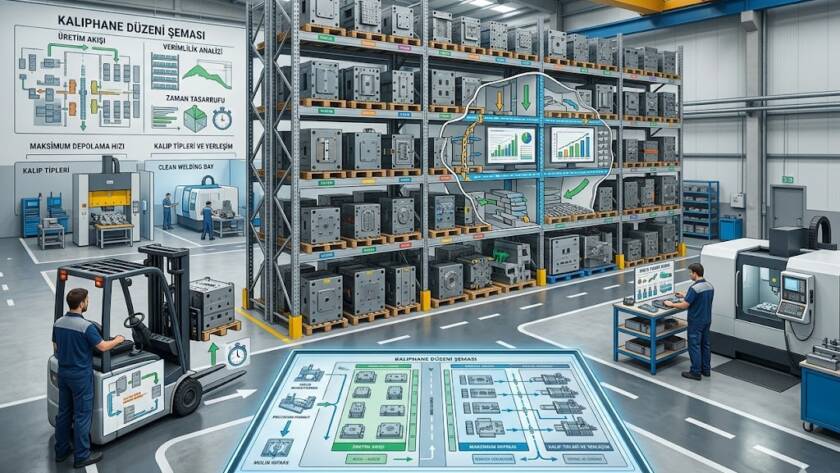
Crane accessibility improves production only when the rack layout also reflects mold change frequency. Frequently used molds should occupy locations that provide practical crane access and clear visibility, while rarely used molds may sit in less convenient positions if the structural design and lifting plan allow. Heavy molds are commonly assigned to lower or suitably engineered levels, but the final arrangement should follow capacity calculations, crane geometry, and operator access rather than a simple rule based only on weight.
A nearby workbench can hold lifting records, connectors, maintenance tools, and mold preparation accessories, while a stable industrial table can support loose components that should not be placed on the open drawer. Keeping these items close to the storage zone can reduce unnecessary walking, but they must not obstruct the crane path or drawer opening area. The goal is to create a compact preparation station where employees can confirm the mold identity, inspect lifting points, collect approved accessories, and begin the transfer without improvisation. 🔧📋
A Practical Crane Access Selection Example
Imagine a plastics manufacturer operating eight injection molding machines and storing thirty molds weighing between 450 and 2,200 kilograms. The mold room uses an overhead bridge crane, but two structural columns limit hook access near one wall, and the aisle also serves maintenance personnel. The plant initially considers a standard rack with identical drawers, yet the mold inventory shows that several wide molds have lifting points near their rear edges, while smaller molds can be collected easily from partial extension drawers.
I would divide the molds into groups based on weight, size, lifting point position, and change frequency, then test both partial and full extension layouts against the crane runway. The wider molds would receive full extension drawers positioned where the hook can approach vertically, while compact molds might use partial extension drawers in the narrower section of the room. Every mold position would receive a code, the heaviest tools would sit on structurally approved levels, and the floor would display a protected drawer and crane operating zone.
The plant would then use a representative mold to simulate opening, sling connection, initial lifting, vertical clearance, crane travel, and transfer toward the machine. Operators would confirm that they can see the lifting eyes, keep their hands away from pinch points, and leave the area without stepping beneath the load. This practical exercise allows Detay Industry to refine drawer depth, extension ratio, level spacing, frame location, and anchor design before production begins, which is far more reliable than discovering a hook conflict after a fully loaded rack has already been installed.
Use Labels, Inspections, and Training to Maintain Safe Access
Every drawer should display its maximum permitted load and assigned mold location, while the facility’s digital records should include mold weight, dimensions, lifting points, rack position, maintenance status, and any restrictions. Operators should perform a visual check before opening a drawer, looking for loose anchors, damaged guides, cracked welds, distorted frames, difficult movement, leaking fluid, blocked travel paths, unreadable labels, and molds that have shifted from their assigned position.
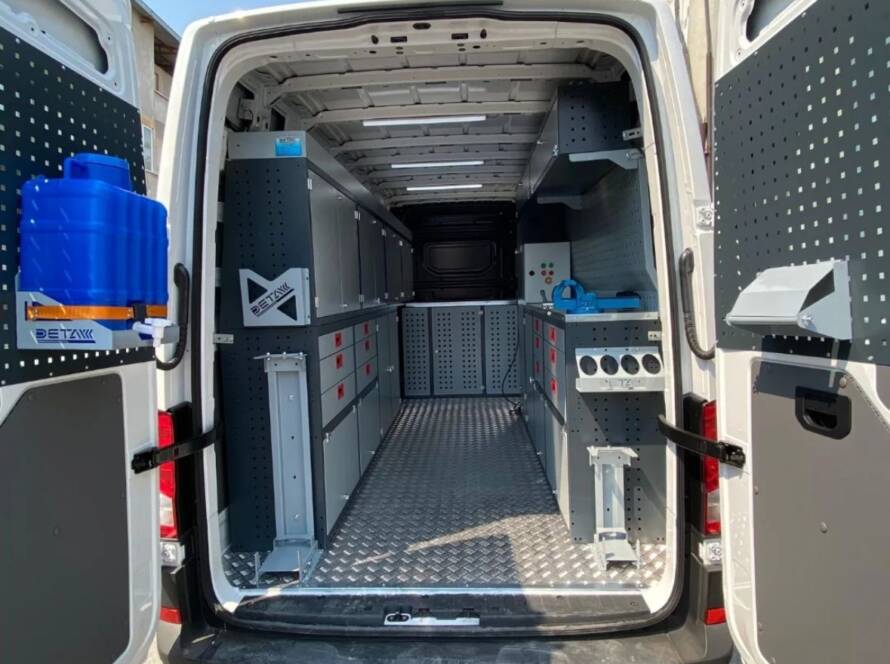
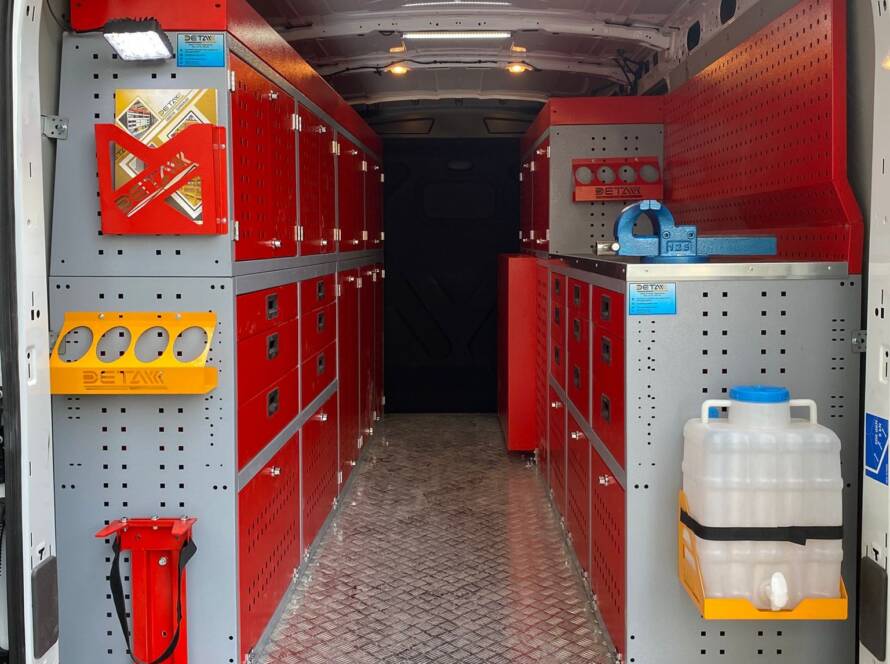
A competent person should inspect the rack at intervals based on the manufacturer’s instructions, frequency of use, load severity, workplace conditions, and applicable local requirements. The plant should also inspect cranes, hoists, slings, shackles, hooks, and lifting beams according to their own examination schedules. The organization used in a roadside assistance vehicle provides an interesting comparison, because both environments depend on rapid access, clearly assigned equipment positions, and dependable inspection routines, even though mold racks involve much heavier stationary loads and specialized crane operations.
Integrate the Rack with the Wider Workshop Storage Plan
Mold lifting accessories, maintenance records, cooling connectors, clamps, protective materials, and inspection equipment should have assigned locations outside the mold drawer unless the rack has been specifically designed to carry them with the mold. A modular in-vehicle cabinet or other compartmentalized storage design can inspire the organizational logic for these smaller accessories, while suitable in-vehicle equipment principles remind us that loose components should remain secured and easy to identify. The structural application is different, yet the workflow principle remains useful: every item should have one defined location that supports the task sequence.
The complete storage area should also allow future expansion. New molds may be heavier, taller, or wider than the current portfolio, and a new crane or injection molding machine may change the preferred transfer route. Leaving controlled expansion capacity and documenting the original design assumptions can help the facility evaluate later changes without turning spare drawer space into an excuse for uncontrolled overloading.
Conclusion
Selecting a crane accessible drawer mold rack requires a complete review of mold weights, dimensions, lifting points, drawer extension, crane capacity, hook geometry, sling configuration, lifting height, floor strength, anchoring, aisle clearance, operator position, and production frequency. A rack should not merely store molds securely while closed; it should also create a controlled and repeatable transition from storage to crane lifting without side pulling, hidden attachment points, blocked access, or uncertain load limits. 🌟 I see the ideal rack as a carefully designed doorway between the mold room and the production line, because every drawer should present the correct mold to the crane in a clear, stable, and predictable position. With accurate mold data, facility specific engineering, practical access testing, reliable inspections, and disciplined lifting procedures, Detay Industry can help mold shops create storage systems that support safer crane access, faster changeovers, and better protection for valuable production assets.
